|
Section SKINNERA- New Zealand (1)
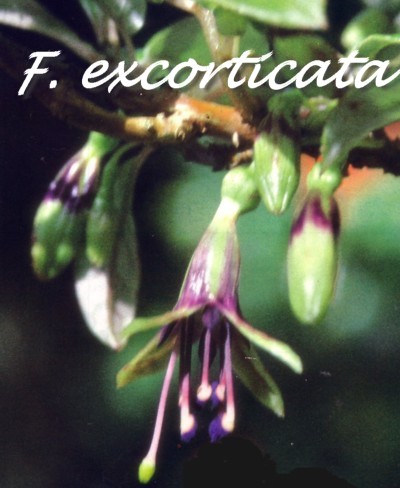 
F. excorticata- a 40' tree in New Zealand and the source
of our "aubergine" hybrids. At maturity it is very dark
in the tube and sepals. |
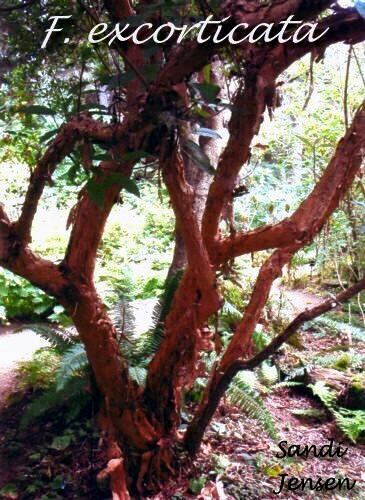
This tree of
F. excorticata grows in Yachats, Oregon, (Gerdemann Garden) out by the Pacific
Ocean. It is winter hardy but likes to bloom in spring when it is too
cold in most inland areas. |
| Section SCHUFIA- Mexico to
Central America. (3 taxa
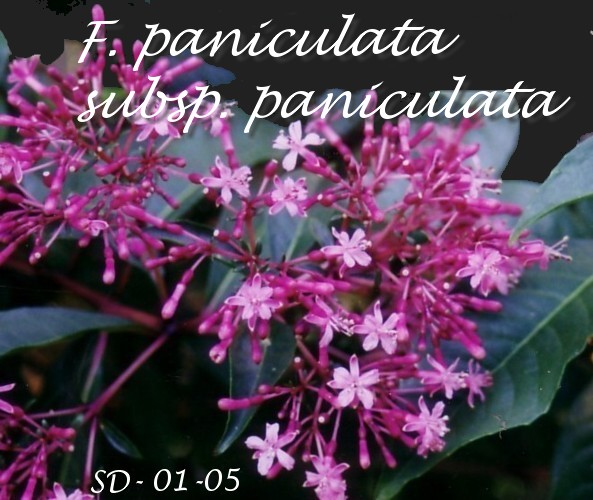
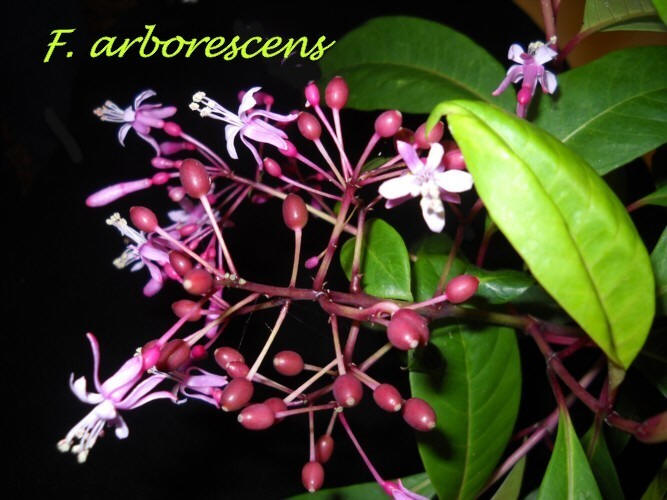
F. paniculata subsp. paniculata- looks like a lilac, likes
warmth and has serrated leaves. (Section Schufia has two other
species that looks alot like this one: F. arborescens, only in Mexico with entire leaves and
F. paniculata subsp. mixensis
also growing in Mexico.) |
Section
HEMSLEYELLA- has no petals, has tuberous roots, and likes warmth.
Central America to northern South America. (15 species)
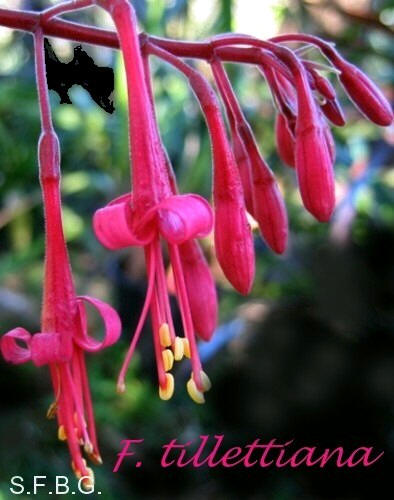
F. tillettiana is native to Venezuela.
 |
|
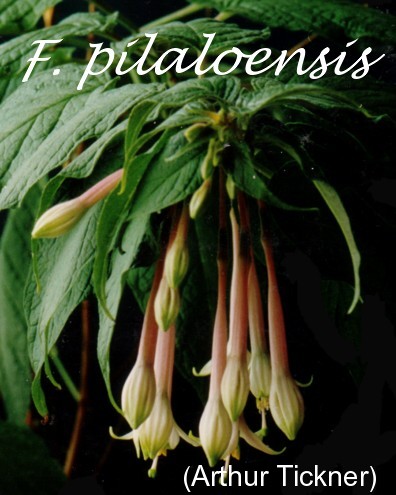
F. pilaloensis is from Ecuador. |
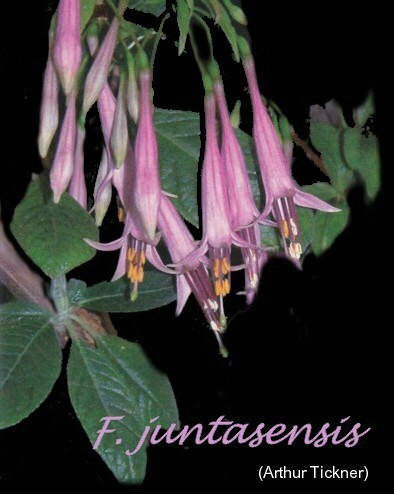
F. juntasensis- often likes to bloom after the leaves drop,
needs warmth. Bolivia |
|
F.U.S.C.A.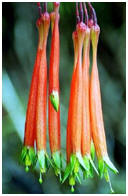
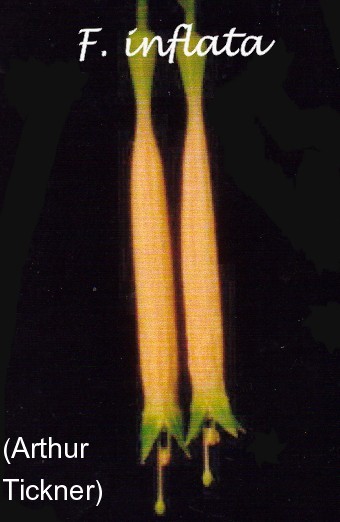
F. inflata
would not even
be recognized as a fuchsia by most, except in Peru. |
Section PROCUMBENTES- from
New Zealand. (1) 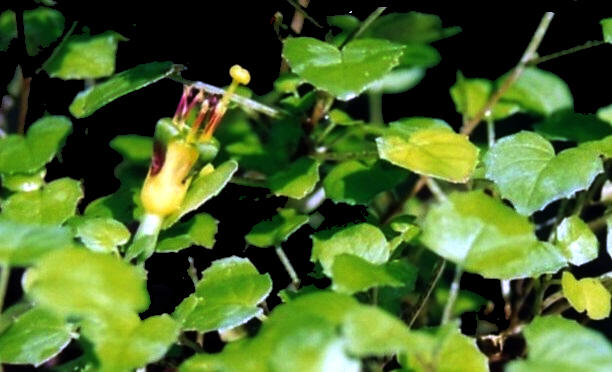 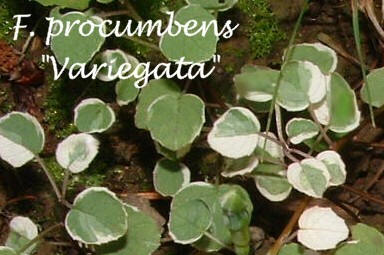
F. procumbens is a common
ground cover in the PNW. It is hardy and perky and easy to grow.
It also has the only yellow in the genus, and that's only in the tube.
The variegated form is less vigorous but very attractive. |
|
Section
ENCLIANDRA- Mexico & Central America. (6 species;
14 taxa)
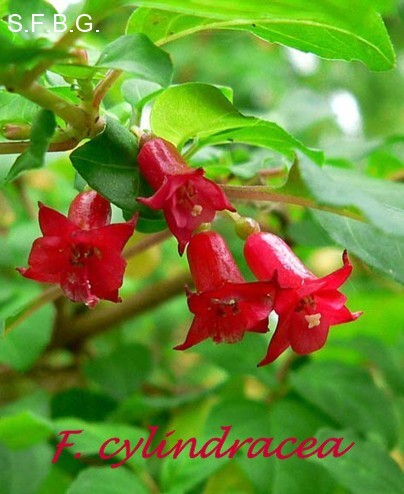
 (FUSCA) (FUSCA)
F. cylindracea has wee,
cylindrical blossoms. |
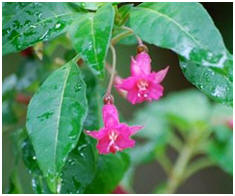
F. ravenii
Fuchsias from this section cross so easily that it is very difficult to
find true species today. |
|
Section ELLOBIUM-
Mexico to Central America. (4 taxa)
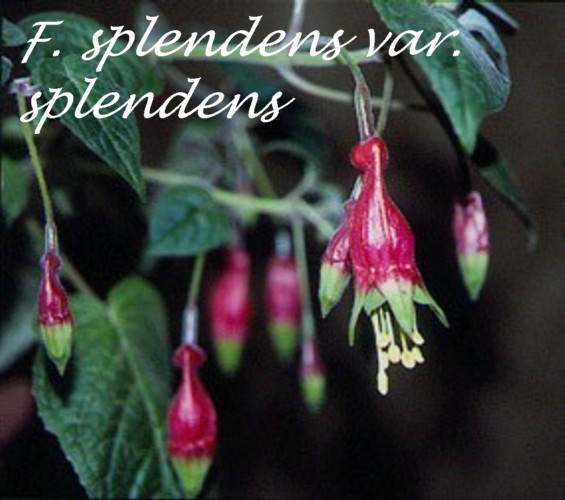
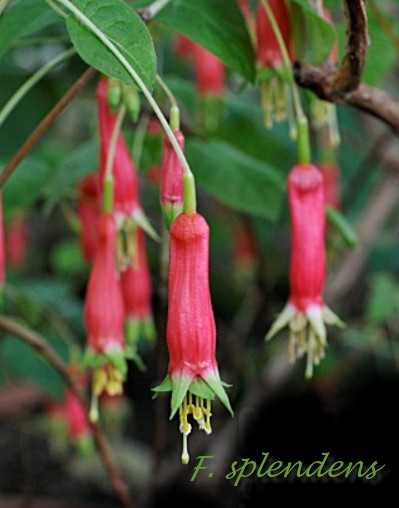
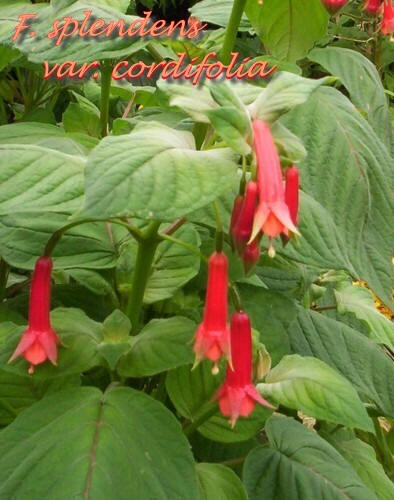
While
F. splendens is fairly winter hardy, it likes to
bloom in early spring in the PNW when it's too cold. Note the pinch in the
tube. Heart-shaped leaves stand out. Also, there is a longer-tubed
version with that obvious pinch.
F. splendens var. cordifolia has lighter,
larger leaves and orangish blossoms with a less obvious pinch. |
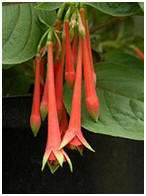 (FUSCA) (FUSCA)
Finding a true F. fulgens is very difficult, but there are
a lot of hybrids with it in their backgrounds. |
|
Section KIERSCHLEGERIA-
Chile (1 species)
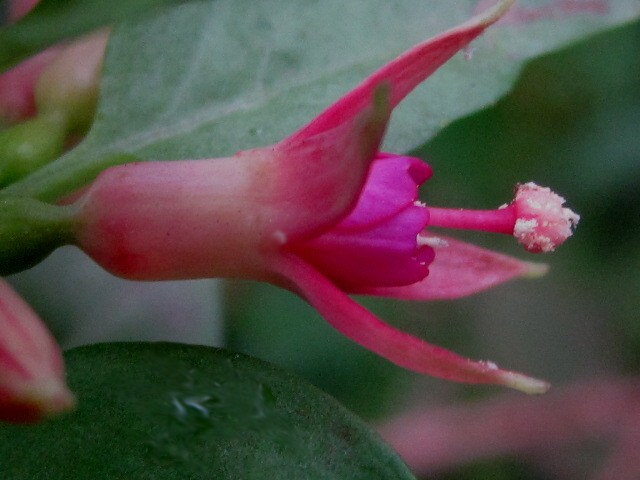 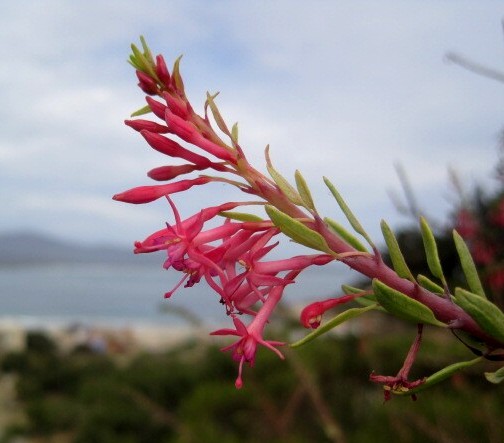
F.
lycioides- Chile. (Roberto Andres
Valenzuela Castillo)
F lycioides intersects with
magellanica at its northern most latitude. |
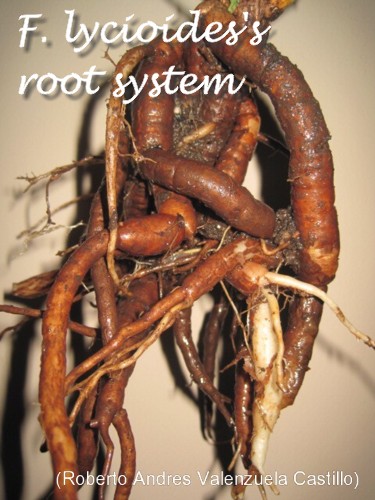
F. lycioides has a root system that
'weathers over' a drought. |
|
Section QUELUSIA-
Brazil & Chile/western Argentina
This section is the best-known section in the PNW because the species
are winter hardy to varying degrees and some of the plants have
historical significance. (9 species; 11 taxa) All are shades of
red in the tube and sepals with shades of purple in the petals.
The sepals are longer than the tube.
F. magellanica
is believed to be one of most significant species found in many winter
hardy hybrids. It came into cultivation around 1733 along with
F. coccinea. (See below)
|
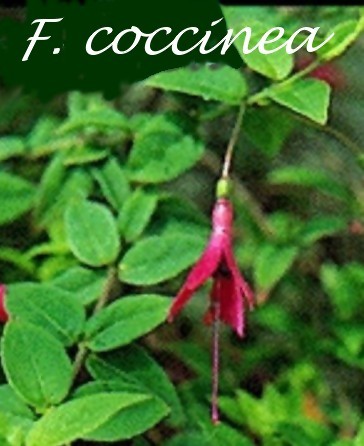
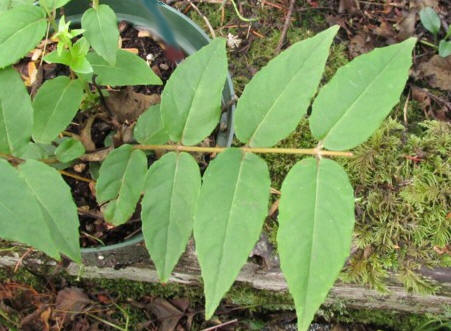
F. coccinea and F. magellanica are believed
to be the first fuchsias in cultivation in Europe, around 1733!
Their similarities led to much confusion. One way to tell
them apart is the leaves on coccinea line up, 2 by 2, directly
across from each other. |
|
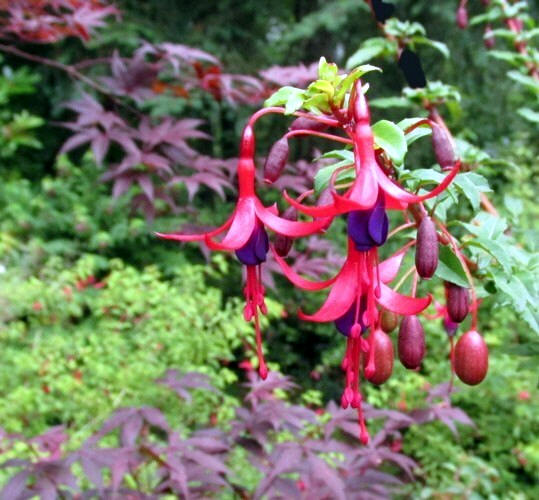
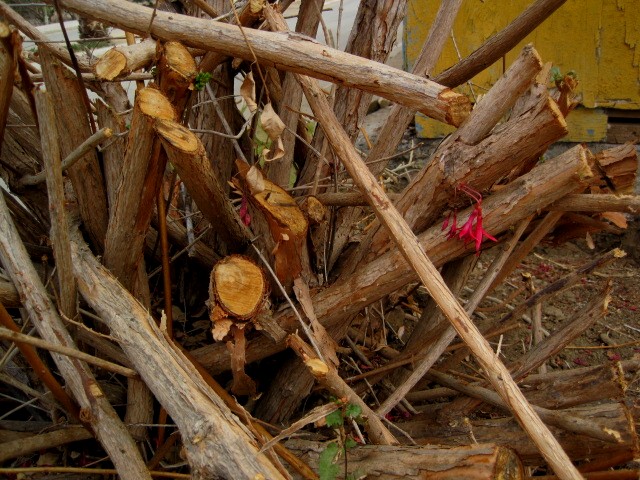
Many gardeners think that they have the species F. magellanica,
but they probably have a hybrid of it. The species is very hardy,
floriferous and a sturdy plant. Firewood? Fence posts? Sure.
F. magellanica grows in
Chile (29°S- 71°S) and western Argentina.
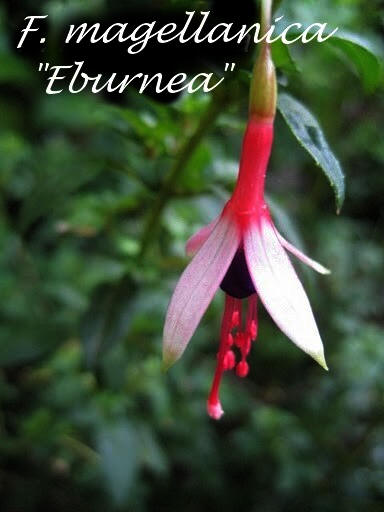
F. magellanica mutates/sports easily so
that one can find all shades of red & pink over all shades of purple to
pink as well as different leaf sizes and shapes.
On the right, F.magellanica. "Eburnea" seems to not be
sure of what color it wants to be.
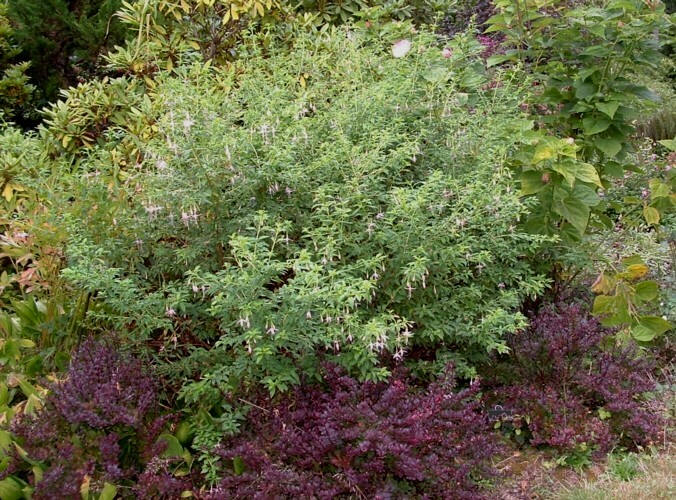
F. magellanica "Alba" or "Molinae" is a light pink mutation of
the otherwise red over purple species.
It is also very hardy and grows to about 6' in the PNW where it freezes
and up to the roof top where it doesn't.
|
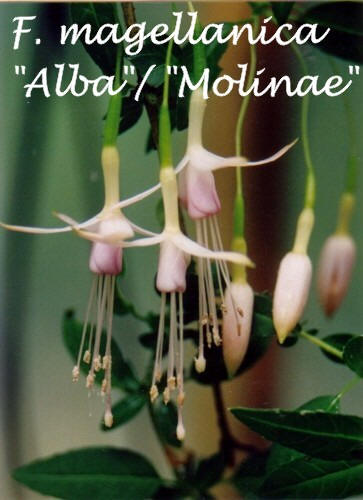
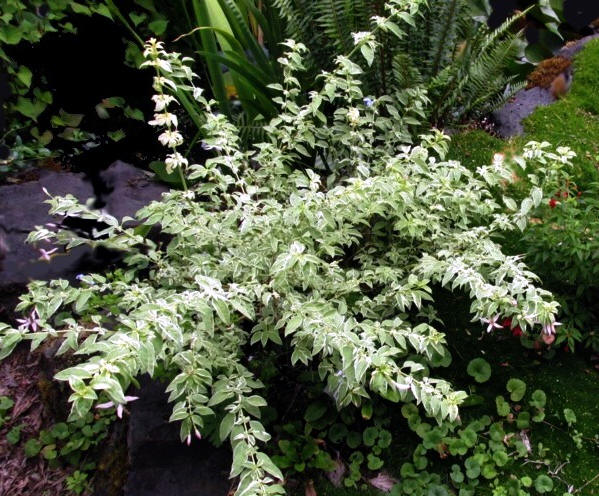
F.m "Alba" on the left.
The leaves mutated too- F.m. "Alba Sharpitor", aka
'Alba Variegata', on the right.
 |
|
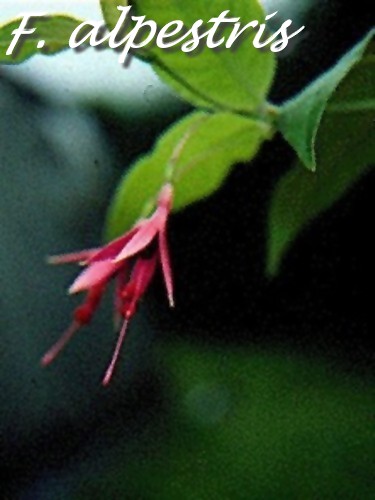
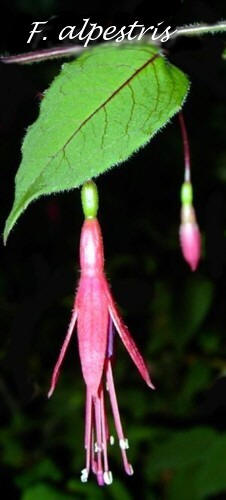
F.
alpestris and all of this section are in cultivation in the PNW. Other than
F. magellanica, they
all grow in Brazil. |
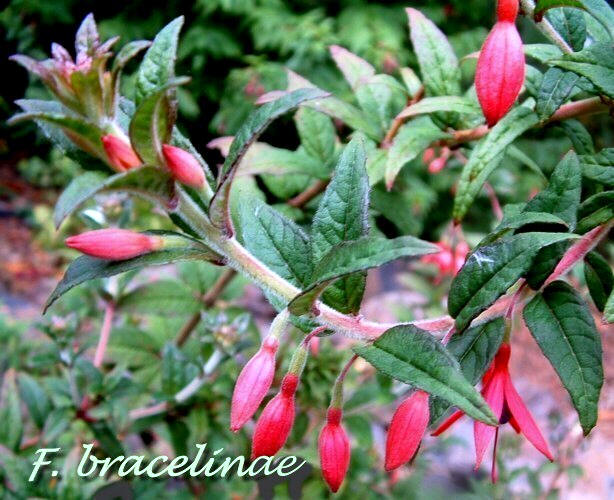
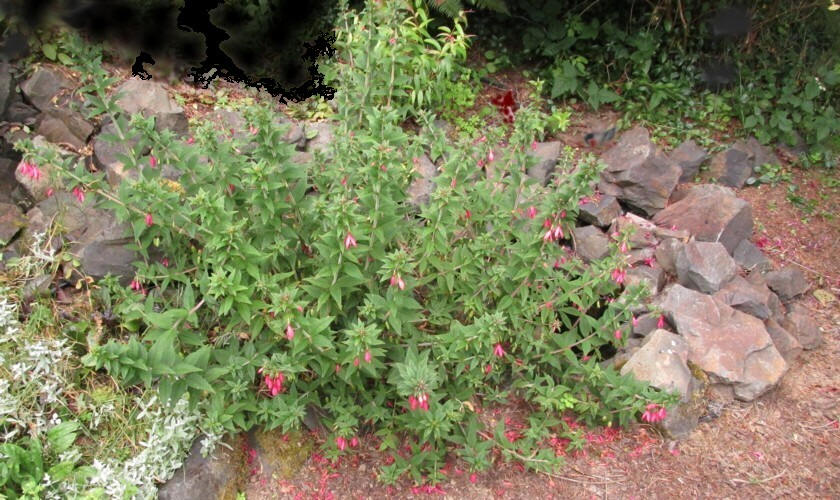
Another very
hardy species, F. bracelinea, is in bloom in June, and it
is somewhat lax and good in a rockery. It will have from 3 to 5
lush leaves per node with short internodes and clusters of blossoms. The
photo on the right was in May with few blossoms, but the growth pattern
is clear. |
|
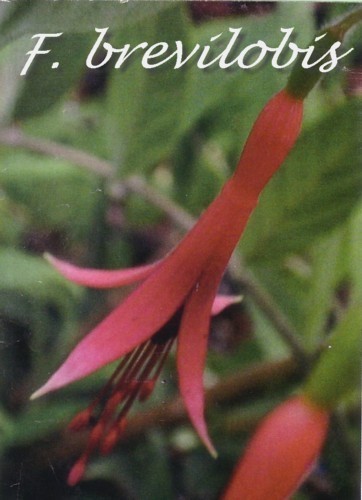
F. brevilobis has a very attractive blossom and soft
leaves. |
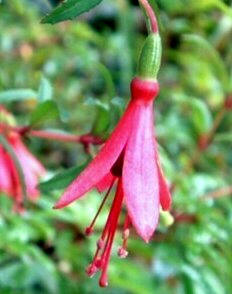
F. campos-portoi has small blossoms, leaves and plant
growth. Its short little tube looks like it swallowed a B-B. It
seems to love cool conditions. |
|
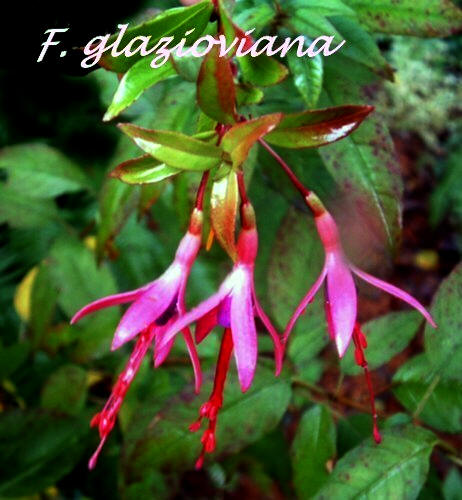
F. glazioviana has shiny, glazed leaves although that is
not how it got its name. Notice the thin, sharp sepals. |
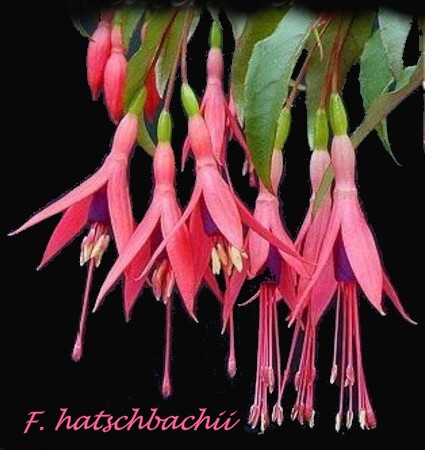
F. hatschbachii is very hardy and has long, thin leaves. |
|
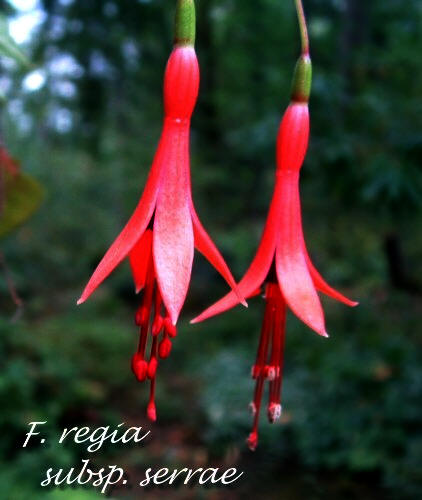
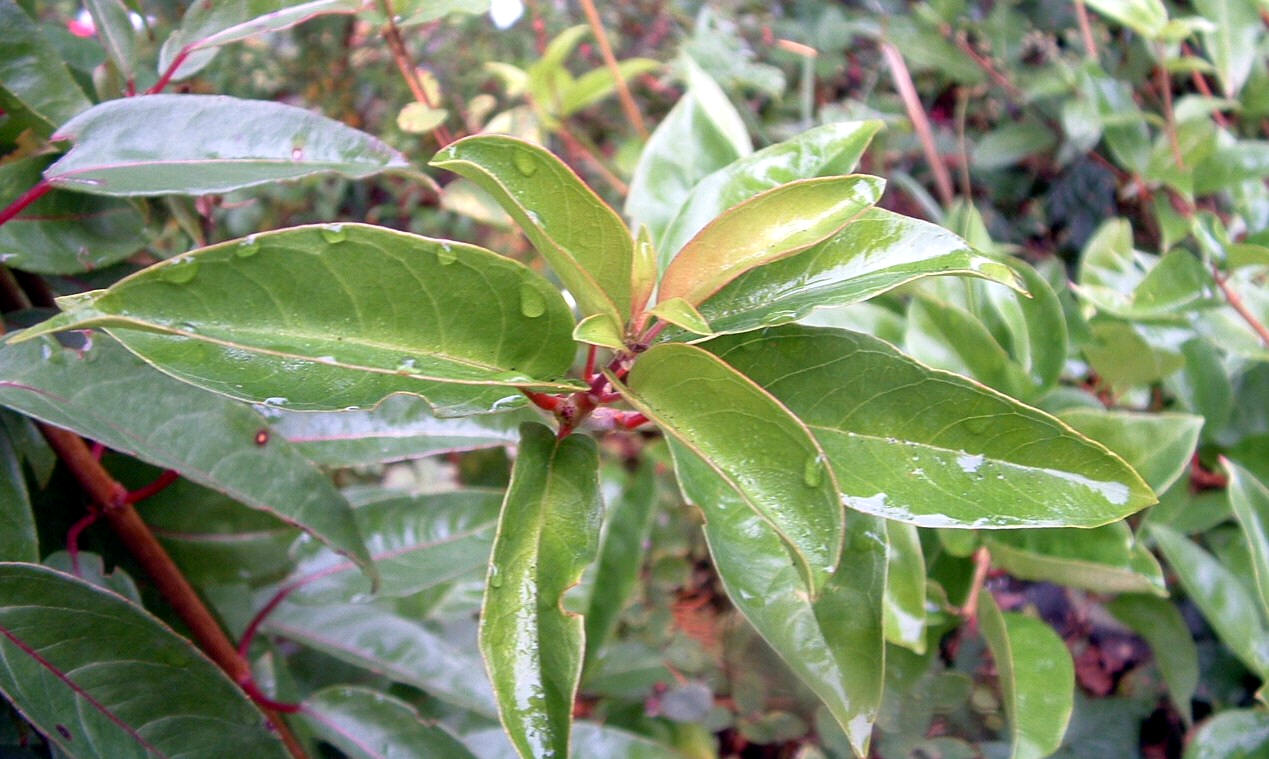
The lax stems with large, shiny leaves are attractive. Newer leaves can
be yellow-green. F. regia subsp. serrae is a large,
lax plant. |
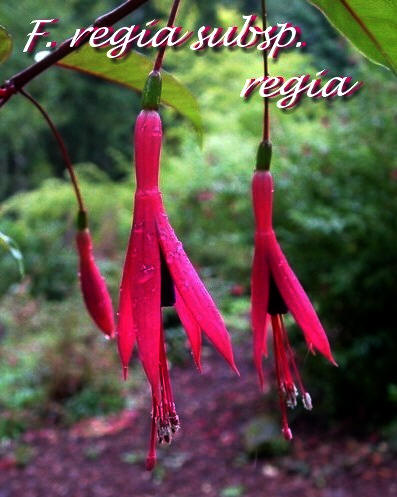
There are four regias.
F. regia subsp. regia grows very
fast and can be used to climb. It has the largest blossoms in this
section. |
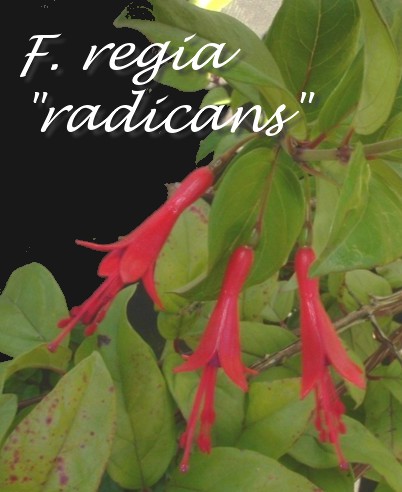
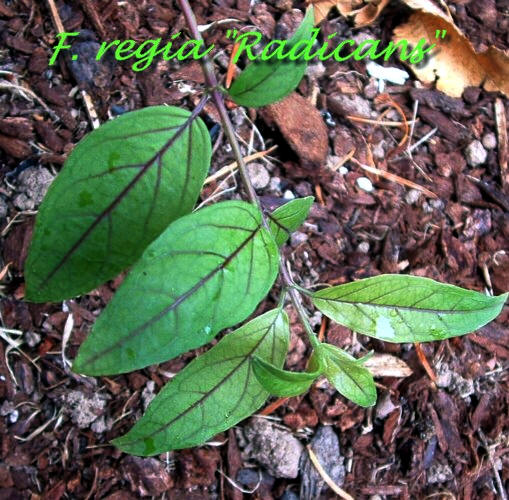
In the taxonomy, we don't yet know where F. regia "radicans"
will go. Dr. Berry writes that he will either recognize it as a
subspecies or a variety. |
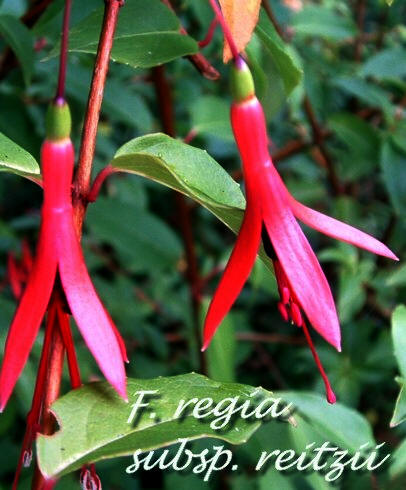
The hardiest regia is F. regia subsp. reitzii.
It will layer and go where it wants. |
|
Section FUCHSIA- The largest section has
65 species, 67 taxa and shares the same name as the genus!
These species grow in the warmer areas- Central and
northern South America. They have long tubes and shorter sepals.
Oranges are common.
|
|
|
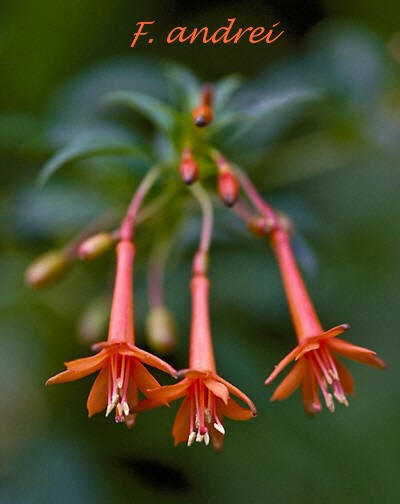
F. andrei grows in Ecuador and Peru. |
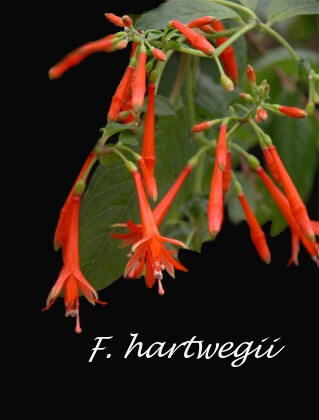
F. hartwegii- from Colombia |
|
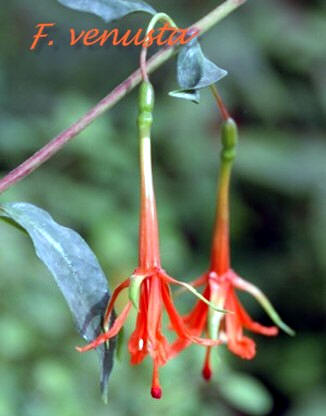
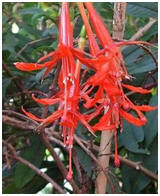
(FUSCA)
Colombia is also home to F. venusta. |
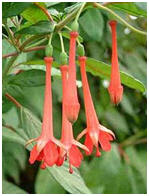
F.
cinerea- Colombia & Ecuador
(FUSCA) |
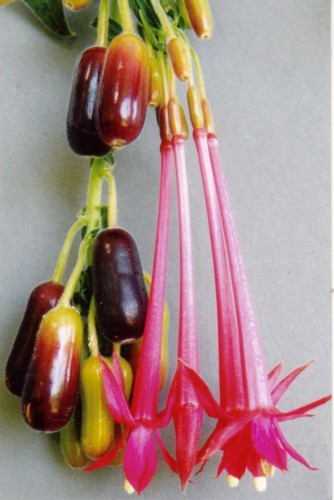
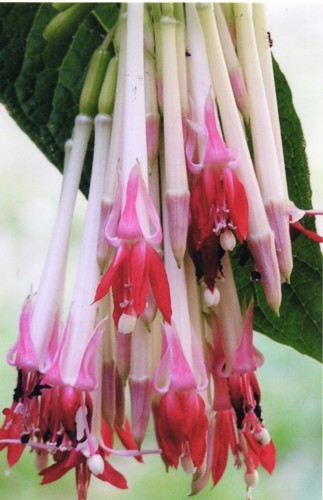
(Ann Tanner & Patty Finigan)
One of the best known species in this section in the
Pacific Northwest is F. boliviana var. luxurians. It
has a 4" tube, large leaves and tall growth. There is a
shorter tubed version: F. boliviana var. boliviana. It grows from Mexico
through northern South America.
F. boliviana mutated to the
white tube while in cultivation, not in the wild. Putting its whole name
here takes some space: F. boliviana var. luxurians "Alba". |
 (WFSS) (WFSS)
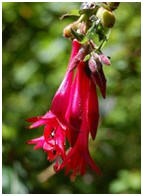
F. mathewsii (FUSCA)
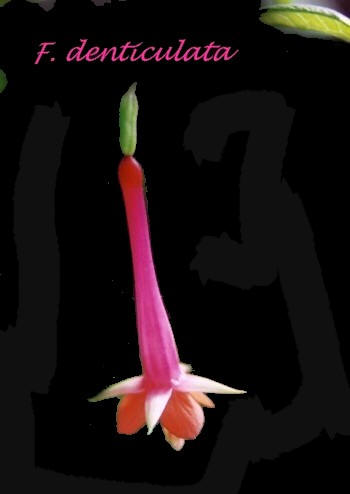
In Peru, one can find F. mathewsii and/or
F. denticulata which was
popular in the 1800;s as a winter bloomer.
F. denticulata can be found in nurseries
under some unusual names,
but they are not the correct name. |
|
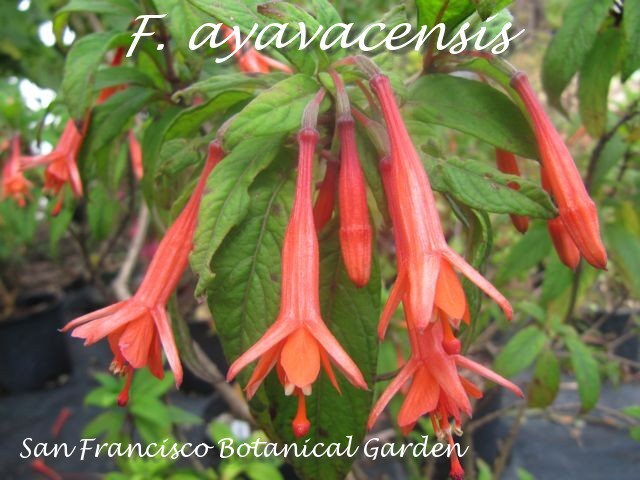
F. ayavacensis grows in Peru and Ecuador. |
 (FRI)
(FRI)
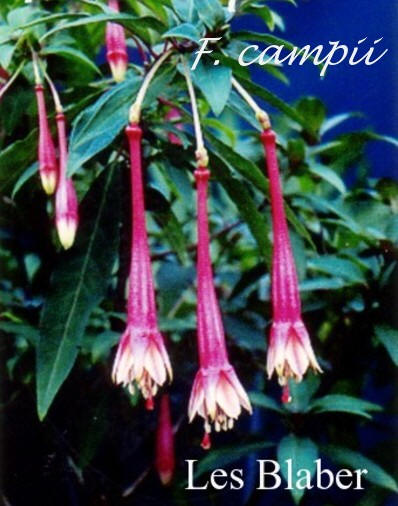
F. campii is Ecuadorian also. |
|
 (LAMB) (LAMB)
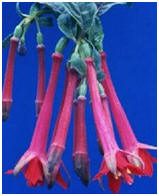
F. crassistipula is Colombian. |
Bolivia is
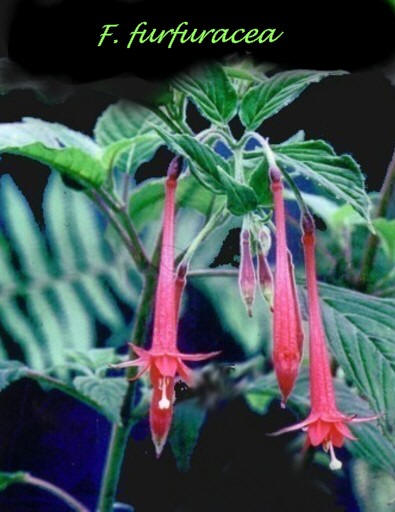
F. furfuraceas's home. |
|
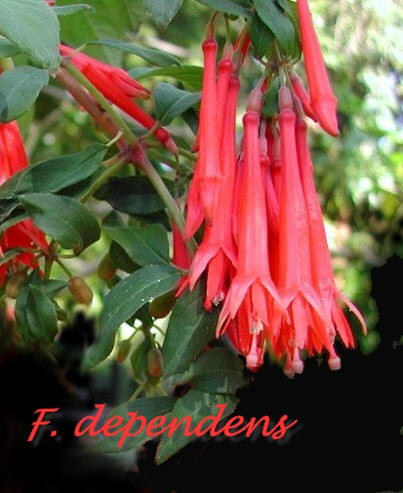
F. dependens- Ecuador
(FUSCA) |
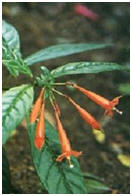
(FUSCA)
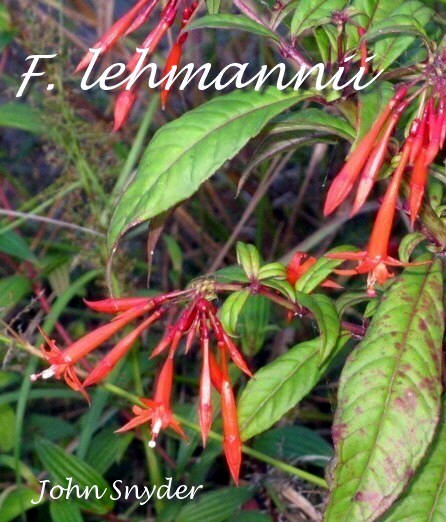
Ecuador again for F. lehmannii. |
|
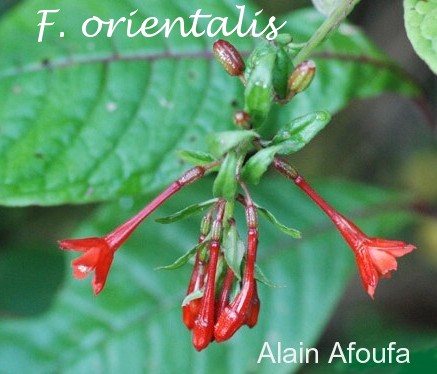
F. orientalis- Ecuador |
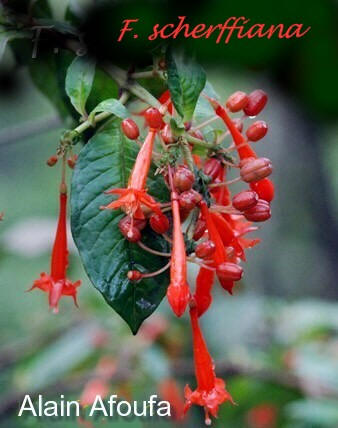
F. scherffiana- Ecuador |
|
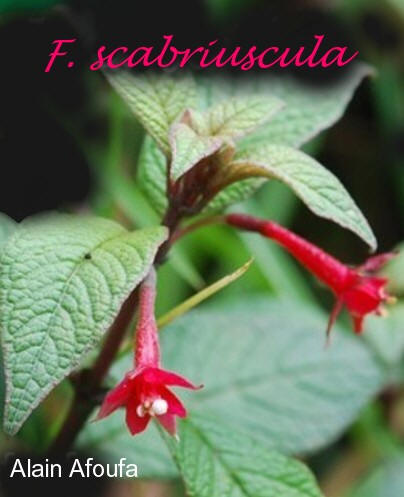
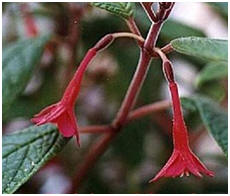
F.U.S.C.A.
F. scabriuscula-
Ecuador |
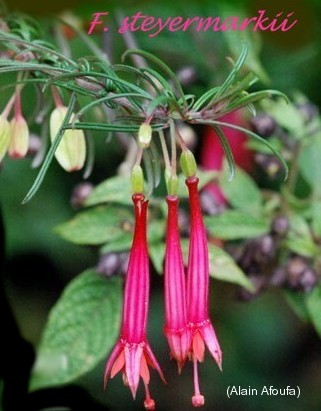
F. steyermarkii- Ecuador |
|
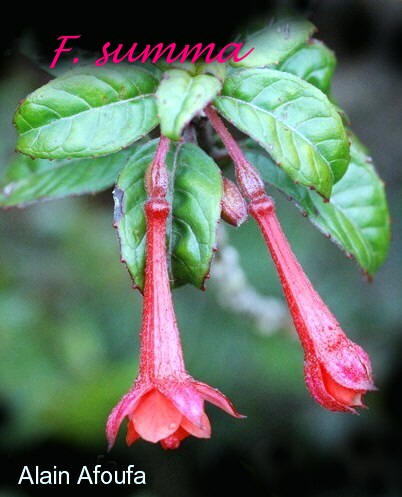
F. summa- Ecuador
|
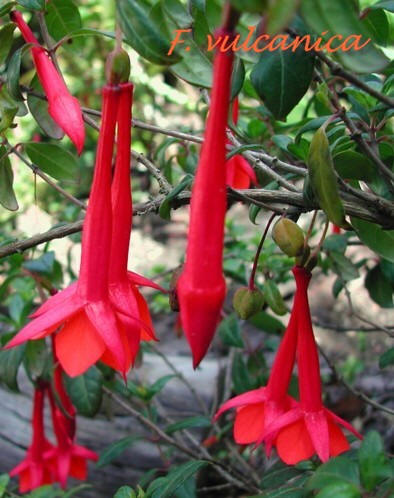
F. vulcanica- Colombia & Ecuador
Any question why Dr. Paul Berry refers to Ecuador
as "a hotbed for species" ? |
|
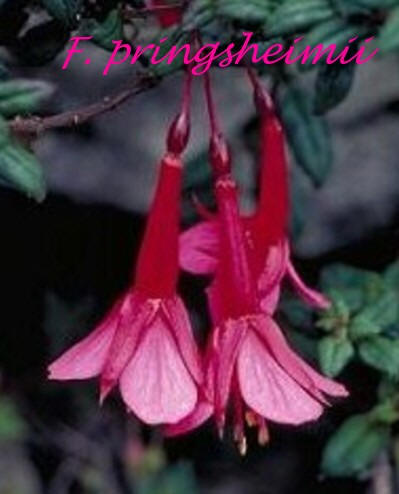
F. pringsheimii lives in the Dominican Republic. |
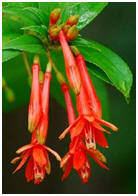
(FUSCA)
F. santae-rosae is from Bolivia. |
|
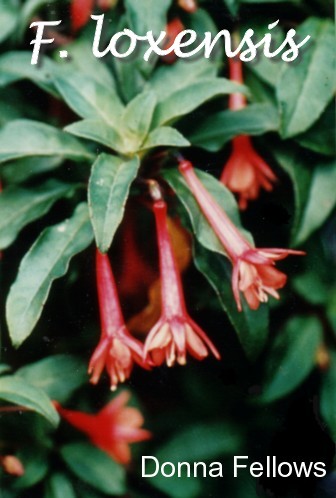
Ecuador, where else? F. loxensis |
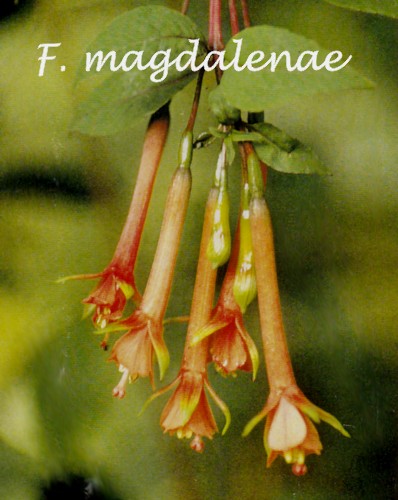
Colombia's
F. magdalenae |
|
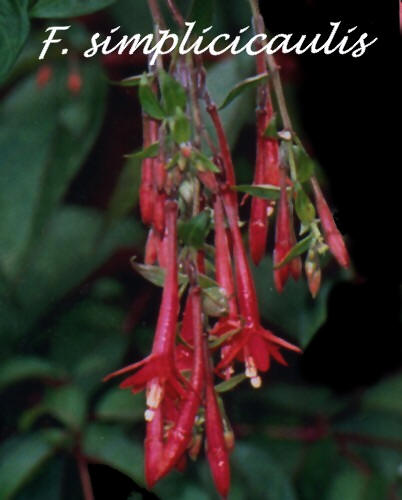
To pronounce
Peru's F. simplicicaulis correctly, a
hiccup is required. |
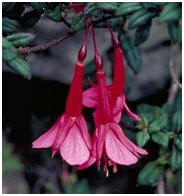
F.
pringsheimii Dominican Republic
(FUSCA)
|
|
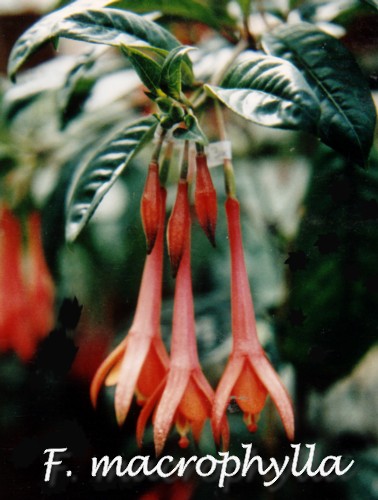
F. macrophylla from Peru. |
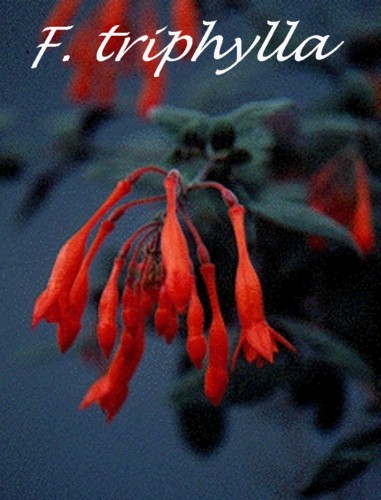
Many wonderful hybrids have come from
F. triphylla.
So few of us have the true species however! Dominican Republic. |